

Rennersistas
Burgenland
Shop Online
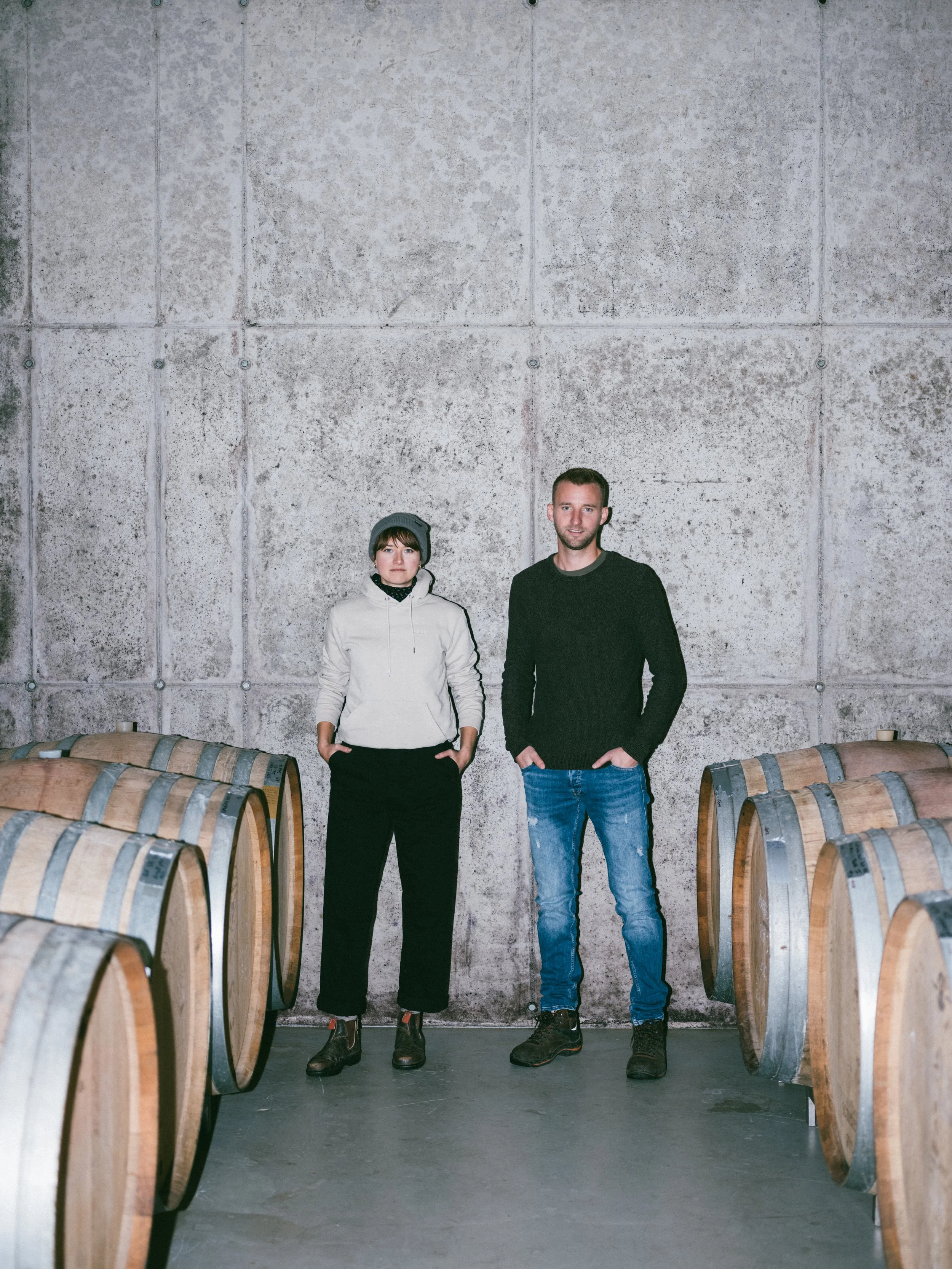
-
Stefanie Renner
-
Gols
Burgenland, Austria -
Certified Organic
Certified Biodynamic
I first met Susanne and Stefanie Renner in January 2017. It was a flying visit, literally, we were in Austria just for the day with the sole purpose of visiting them in Gols, a 40-minute drive from Vienna airport. Susanne was astonished that someone would travel to Vienna for less than 6 hours just to visit them, they only released their first vintage under Rennersistas in 2016.
Weingut Renner was established in 1961, with Stefanie and Susanne’s parents, Helmuth and Birgit, assuming control in 1988. Helmuth made good wines, but his philosophy would be considered more on the conservative side than his daughters.
Sus and Stef began working in the family business at the end of 2014. It was important for them to set their own agenda but remain respectful of their heritage. The first bottling under Rennersistas was from the 2015 vintage, and just 5000 bottles were produced.
There has been much change over the past 10 years, most nobably the birth of three children, Helmuth’s retirement and a wedding. What started as Rennersistas with Stef and Susanne’s has become Renner und Rennersistas. This coincided with Susanne stepping back in 2021 to focus on raising her two young children, and Georg their younger sibling joining in 2020.
The village of Gols sits in the wine region of Neusiedlersee, Burgenland, and has a very special microclimate. Gols has Austria’s longest hours of sunlight, high humidity and moderate temperature and is influenced by the large Neusiedlersee Lake. At 315 square kilometres, this is Europe’s shallowest lake at just 1.5 meters depth, surrounded by reed beds and teeming with bird life.
With 11.5 hectares under vine in 2025, the ratio of white to red has changed considerably since the early days, the split is now 50/50 white and red. Four hectares of this is younger vines which Stefanie and Susanne planted in 2016. Located at higher altitude above the village it was planted to mostly white varieties: Welschriesling, Gruner Veltliner Chardonnay, Grauburgunder, Muscat Ottonel and Gewurztraminer, as well as some Pinot noir and St Laurent.
Helmuth was one of the founders of Pannobile back in 1984, an association of vignerons from the village of Gols who had a different approach. Its aim was not to be modern or international, but to be committed to the soils, the character, and the climate of their region and to produce premium wines made from the local grape varieties. The group consists now of Paul Achs, Judith Beck, Andreas Gsellmann, Gernot Heinrich, Gernot Leitner, Andreas and Lydia Nittnaus, Gerhard Pittnauer, Claus Preisinger and Stefanie and Georg Renner.
Renner were certified organic in 2009 and in 2018 certified biodynamic by Demeter.
At harvest time several passings occur in each vineyard, the first pick searching for freshness in the grape. In the cellar Steffi uses a range of vinification’s and vessels. Maceration of both whole bunches and de-stemmed fruit, directly pressed juice and infusions, a technique used for red vinification also. Much of this approach has come from international harvests, first with Tom Lubbe in 2014 and here in Australia with Tom Shobbrook the following year. Èlevage occurs in tank, ceramic, used barrels and demi muids as well as Stockinger of varying sizes.
The 2025 harvest marked 10 years for Stefanie, the first vintage of Rennersistas being 2015. During this time Steffi has firmly established who she is and knows the direction she wants to go. It’s an exciting period for Renner und Rennersistas.
The Wines
-
Varietal Pinot Blanc / Chardonnay
Colour White75% Weißburgunder (Pinot Blanc) and 25% Chardonnay. The Chardonnay component was left as whole bunch and macerated for 5 days. The Weißburgunder was 50% direct press and 50% de-stemmed and macerated for 2 days. Èlevaged in used 2000L Austrian oak amphora for 7 months.
-
Varietal Welschriesling / Pinot Blanc / Gruner Veltliner / Muskat / Chardonnay
Colour OrangeAn assemblage of 40% Welschriesling, 20% Weißburgunder, 18% Grüner Veltliner, 12% Muskat Ottonell, 10% Chardonnay. The Weißburgunder (Pinot Blanc) was de-stemmed and macerated for 3 days. Both the Chardonnay and Gruner Veltliner were directly pressed. The remaining Welschriesling and Muskat were whole bunch macerated between 3 and 7 days. Èlevaged for 7 months on lees in used barriques (225 litre and 500 litre), 1200L foudre, and clay amphora.
-
Varietal Pinot Blanc
Colour White/Macerated (See Note)Pinot Blanc was destemmed and macerated for 8 days on skins. Rested for 8 months in used barriques and Amphora.
Note This wine is technically macerated, though drinks like a white with texture.
-
Varietal Welschriesling
Colour White/Macerated (See Note)100% Welschriesling, whole bunch maceration in Amphora for between 4 and 9 days. Èlevaged in used barriques and amphora for 8 months.
Note This wine is technically macerated, though drinks like a white with texture.
-
Varietal Zweigelt / Bläufrankisch
Colour Rosè75% Zweigelt and 25% Bläufrankisch, both varieties were treated the same way. Half was directly pressed; the remaining half left overnight and pressed the following morning to bring some colour. 8 months èlevage in used 1.200L and 3.000L Austrian oak.
-
Varietal Pinot Noir
Colour RedThree different picks occurred for the Pinot Noir. The fruit was all whole bunch maceration for 3 days on skins. Rested for 7 months in two 500l used oak barrels.
-
Varietal Zweigelt / Bläufrankisch / St Laurent / Rosler
Colour RedAn assemblage of 54% Zweigelt, 24% Bläufrankisch, 20% St.Laurent and 2% Rösler. The Zweigelt was whole bunches macerated for 6 days on skins. The Bläufrankisch, also whole bunches, 3 days on skins, and the St Laurent and Rosler directly pressed. Rested for 7 months used barrels and amphora of varying size.
-
Varietal Zweigelt / St Laurent / Bläufrankisch
Colour Red55 % Zweigelt, 30% St Laurent and 15% Bläufrankisch. 15% of the grapes were whole bunches directly pressed, the remaining 85% were destemmed and macerated for 9–12 days. Rested for 8 months in used French and Austrian oak of varying sizes.
-
Varietal Zweigelt
Colour RedIn 2017 the Zweigelt was 10% whole bunch and 90% de-stemmed fruit, macerated for 13 days then rested for 11 months on lees in used French and Austrian oak.
The 2022 vintage Zweigelt is 100% whole bunches, macerated for 5 days only. Elevage is for 12 months in used 2000L foudre and 225L Austrian oak barrels.
-
Varietal Bläufrankisch
Colour RedThe Bläufrankish was de-stemmed and macerated for 12–15 days, èlevaged for 11 months in used French and Austrian oak.
-
Varietal Zweigelt / Bläufrankisch
Colour RedAn assemblage of 60% Zweigelt, 40% Bläufrankisch, the grapes were macerated between 6 and 8 days, 80% whole bunch, 20% de-stemmed. Rested for a year in used barriques and foudre followed by another 14 months in tank.