

Marto
Rheinhessen
Shop Online
-
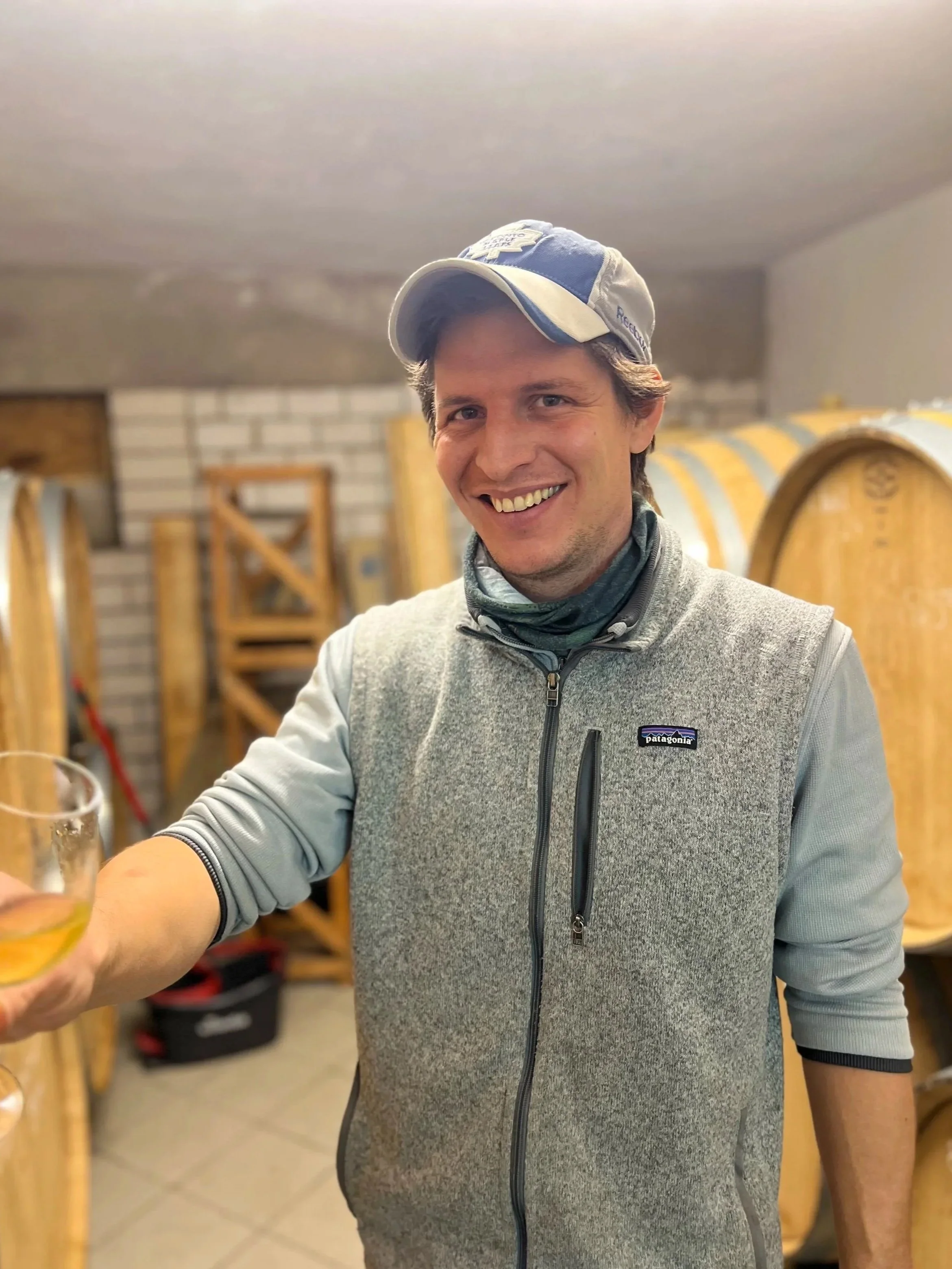
Martin Wörner
-
Flonheim
Rheinhessen, Germany -
Organic
At the forefront of a new generation of young winemakers in Germany is Martin Wörner and his label Marto.
Martin’s grandfather was a grape grower in the village of Flonheim. He was also the first in the town to bottle wine under his own label. When he retired the family maintained the vineyards and the fruit was sold to the co-operative. That was until 2016 when Martin began looking after the land.
Martin attended wine school, it was a conventional program that taught the students to correct problems in winemaking with chemical intervention. After some encounters tasting natural wine, Martin sought experience from some of the best producers of the time. In 2015 he worked at Gut Oggau with Eduard and Stephanie Tscheppe and in 2016 at Matassa with Tom Lubbe. His time with Tom was to be the most influential, learning a lot about winemaking with aromatic varieties and that fundamentally wine is made in the vineyard.
The Rheinhessen is the largest wine region in Germany, 133 of the 136 villages are connected to viticulture and 20% of its land is dedicated to vines. The soils are variable and distinct, changing every 100 meters or so, with limestone, sandstone, silt and clay through to volcanic rock.
The village of Flonheim where Martin is located is most famous for its sandstone quarry. It is also a region that pioneered new grape varieties between 1915–1930 by viticulturist Georg Scheu. Several of these varieties can be found in Martin's vineyards, inclusive of:
Scheurebe: a cross of Silvaner and Riesling, it is a late ripening aromatic grape with good acidity levels.
Faber: a Pinot Blanc and Muller Thurgau crossing, early ripening, also with good acidity levels and ideal for blends.
Würzer: a cross of Gewürztraminer and Muller Thurgau, not commercially planted until the 1980’s.
Martin works his vineyards in organic farming with some biodynamic principles applied. The focus is always on soil health.
The estate has grown over the past 9 years. From the 8 hectares planted to predominantly aromatic varieties, like Bacchus and Muller Thurgau which his grandfather planted, Martin now has 13 hectares of vines. In 2017 he began to replant a large portion of the aromatic varieties with a focus on planting Riesling and Pinot Noir. Additionally, he has been acquiring older vineyards planted to Riesling and Pinot Noir also.
All wines are indigenous yeast fermentation, matured in used wooden barrels on the lees for a minimum 12 months, and are bottled unfiltered, un-fined and without added sulfur.
Since his first vintage in 2017 to now, 2025, Martin feels he now understands the Rheinhessen and the direction he wants to go in.
The Wines
-
Varietal Huxelrebe / Muller Thurgau / Wurzer
Colour Sparkling OrangeHuxelrebe is macerated for two weeks, pressed and èlevaged in old foudre. Wurzer and Muller Thurgau were directly pressed, combined with the Huxelrebe for secondary fermentation in bottle.
-
Varietal Riesling
Colour WhiteRiesling from a vineyard of Limestone soil with fossilised sediment, directly pressed and èlevaged in old oak for 14 months.
-
Varietal Muller Thurgau / Bacchus / Riesling / Scheurebe / Sylvaner
Colour OrangeAn aromatic blend of Muller Thurgau, Riesling, Scheurebe, Bacchus, Wurzer, Faber and Sylvaner. The Muller Thurgau and Scheurebe both spent approximately 2 weeks on skins; the other varieties were directly pressed. Èlevaged in old oak for 14 months prior to blending and bottling.
-
Varietal Portugieser / Scheurebe
Colour Red (Chilled)A red-white blend of Portugieser and Scheurebe. The fruit was handled in several ways. There was partial co-fermentation of the grapes, some Portugieser was directly pressed and some Scheurebe was macerated on skins for around 6 days. Èlevaged in old oak for 14 months prior to blending and bottling.