

Koppitsch
Burgenland
Shop Online
-
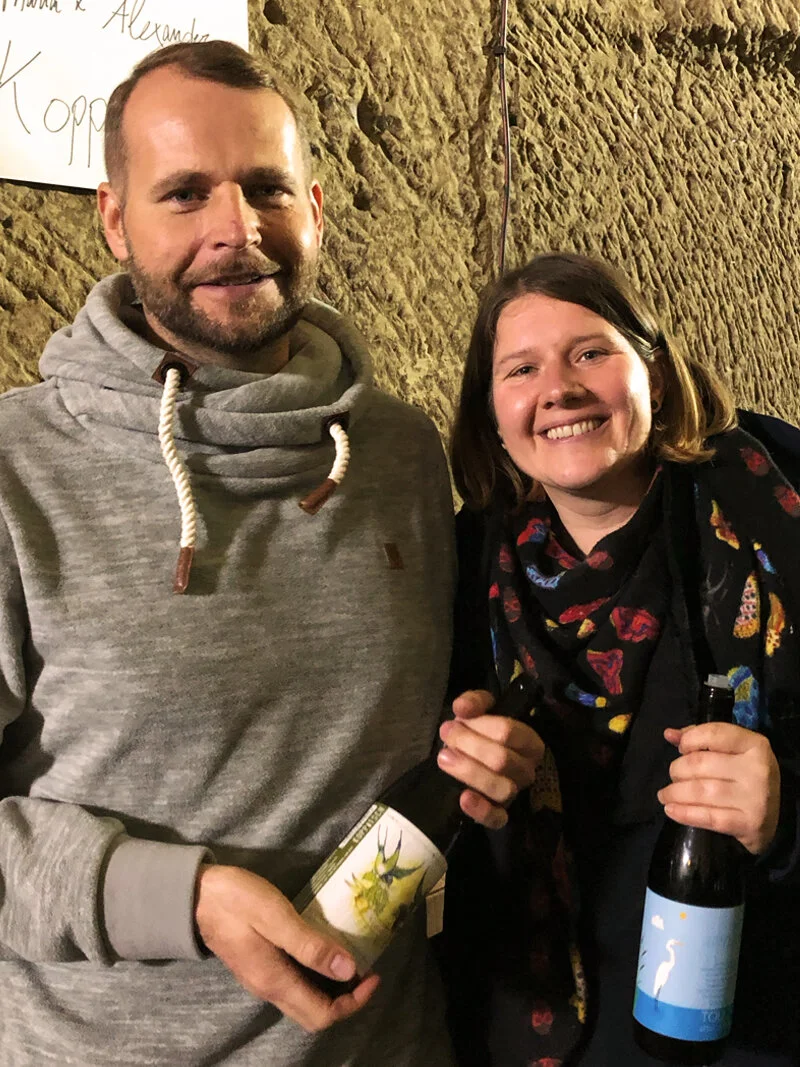
Alex Koppitsch
-
Neusiedl am See
Burgenland, Austria -
Practising Organic and Biodynamic
In 2011, Alex and Maria Koppitsch took control of his families 6 hectares of vines in Neusiedl am See, Burgenland, just 40 minutes from the Austrian capital, Vienna.
Prior to this Alex spent 6 years working with one of the Burgenland’s leading winemakers, Gerhard Pittnauer in the neighbouring village of Gols. It was during this time, that Gerhard converted his vineyard practices to biodynamic farming and was one of the founders of respekt-BIODYN, an association of 25 leading central European vignerons focused on biodynamic farming. This was pivotal for Alex and the direction he would take Koppitsch, he took these principles and applied them to the family farm in 2010.
Across their 6 hectares Alex and Maria farm 5 vineyard sites, all located around the village of Neusiedl am See.
—
THE VINEYARDS
Seefeld
With sandy soil, this vineyard sits next to the marshes of the lake. It is a dry, windy and hot site, within the direct haze of lake Neusiedl, producing grapes of intense aromas.
Neuberg
Neuberg vineyard is a rocky limestone hill in the north-west of the town and belongs to the Leithaberg Mountains. With scant topsoil, there is a large proportion of limestone fragments close to the surface (and some schist). The vines are approximately 65 years old and Neuberg is the vineyard which produces the top cuvees, Perspektive Weiss and Perspektive Rot.
Prädium & Hutweide
Both Prädium and Hutweide are located on the plateau above the lake. The soils are sandy on the top with a layer of rubble underneath, large gravel/river stones from the ancient Danube river. The vineyards were planted between 1988 and 2002, the land in its heyday was used for grazing livestock
Schafbühl
The smallest vineyard located north-east of the lake, the soil composition is free-draining, alluvial clay. A southwest slopping hill rolling from the Wagram plateau towards the lake.
—
Under vine are; Weißburgunder, Welschriesling, Chardonnay, Gemischter Satz weiss, Grüner Veltliner, Sauvignon Blanc, Blaufränkisch, St Laurent, Zweigelt, Pinot noir and Syrah.
In the early stages of taking over the winery, Alex went through a phase of vinifying all plots and varieties separate. Despite their tiny cellar being crammed with sometimes 24 different wines, it was for him incredibly important and led to a close understanding of each terroir and varietal within it.
Grapes are hand harvested and fermentation is only with indigenous yeast. In the cellar they use old barriques and 500 litre acacia, fibreglass and stainless-steel tanks. The reds are de-stemmed, although as Maria likes to say, "it's an old de-stemmer so maybe only 90% of the grapes are really de-stemmed!"
Until 1921 Burgenland was a German-speaking part of the Hungarian monarchy. In homage to this history of Hungarian culture, several of the Koppitsch wines have Hungarian names: 'Homok' (sand), 'Rosza' (Pink) and 'Ret' (grassland).
The Wines
-
Varietal Bläufrankisch / Syrah
Colour Rosé50% Blaufränkisch 50% Syrah from the Neuberg vineyard, hand-disgorged 6 months after harvest at the beginning of Spring.
-
Varietal Gruner / Weißburgunder / Sauvignon Blanc
Colour White40% Gruner Veltliner, 40% Weißburgunder, 20% Sauvignon Blanc from the Seefeld plot. Whole bunches are pressed, partially co-fermented. Élevage in tank and large acacia for 7 months.
-
Varietal Weißburgunder / Chardonnay
Colour White80% Weißburgunder, 20% Chardonnay, from Neuberg vineyard. The grapes see minimal skin contact (maybe just 4 hours) before the bunches are direct-pressed. Fermentation and élevage is in old barriques (225Lt) No bâttonage occurs and élevage is for 12 months, blended prior to bottling.
-
Varietal Gemischter Satz / Welschriesling (Macerated)
Colour Orange50 % Welschriesling from the Neuberg vineyard and 50% Gemischter Satz (see note below) from Schafbühl. 70% de-stemmed fruit, 30% whole bunches, 14 days maceration for both. The de-stemmed fruit is free-run juice, the whole bunches basket-pressed. At this stage the wine is blended and then élevaged in old barriques for 12 months
Note Gemischter Satz is the growing of different grape varieties together in the same vineyard, harvested together and made into one wine. They do not know all varieties that grow here, but some are: Grüner Veltliner, Brauner Veltliner, Weißburgunder, Welschriesling, Sauvignon Blanc, Traminer, Muskat, Neuburger and many more.
-
Varietal Welschriesling / Weißburgunder / Chardonnay / Blaufrankisch / St Laurent / Rosenmuskateller
Colour White / Red Blend (Chilled)Abendrot is a single vineyard wine, the grapes coming from the Neuberg vineyard, with the focus being on the terroir, it’s all about limestone. The Welschriesling is macerated for 7 days, the Rosenmuskateller whole bunches in semi carbonic for a week also. The blend also incorporates a component of Persepktive Weiss and Perspektive Red. Abendrot translates to Afterglow.
-
Varietal Zweigelt / Blaufrankisch / St Laurent / Pinot Noir
Colour Rosé40% Zweigelt, 40% Blaufrankisch, 10% St Laurent, 5% Pinot, 5% Syrah. Whole bunches are pressed, partially co-fermented, élevage in tank for 7 months.
-
Varietal Zweigelt / St Laurent
Colour Red80% Zweigelt 20% St Laurent, de-stemmed and macerated for 8 days. Élevage occurs in tank, and a portion of the Zweigelt in large acacia, for 12 months.
-
Varietal Blaüfrankisch / St Laurent
Colour Red70% Blaüfrankisch, 30% St Laurent, mostly de-stemmed, 10 days maceration. The varieties are élevaged separately for 2 years in old 225 litre barriques. Blending occurs prior to bottling.